

Solar powered fountain installations are transforming gardens and outdoor spaces, allowing homeowners to add moving water features without any electrical wiring, utility cost, or grid connection. In this practical guide, you’ll learn exactly how solar fountains work, what to watch out for, and how to avoid common mistakes—so you can make your landscape functional and beautiful with truly sustainable water art.
Key Takeaways
- Solar powered fountain systems offer off-grid ambiance and eco-friendly benefits with zero utility cost, but performance depends on sun exposure and season.
- Actual installation is easy when you follow step-by-step instructions, with many styles and upgrades available to match your needs.
- Comparison shopping is essential—battery backup, winter durability, and maintenance can vary widely between brands and models.
- What Is a Solar Powered Fountain and Why Use One?
- How to Install a Solar Powered Fountain (A Step-by-Step Guide)
- Advanced Analysis & Common Pitfalls
- Conclusion
- Frequently Asked Questions
What Is a Solar Powered Fountain and Why Use One?
A solar powered fountain is a water feature that uses small solar panels to generate electricity and power a fountain pump. Instead of plugging into a wall, the solar panel converts sunlight into energy, energizing the pump to keep water moving. Popular styles include solar birdbaths, floating solar pond pumps, wall-mounted spouts, and standalone fountains for patios or decks. There’s no need for electrical cords, trenching, or monthly usage costs.

Why are solar powered fountain solutions so popular? Homeowners love them for several reasons:
- Zero grid connection needed — works anywhere with sun, ideal for remote gardens and patios.
- No power bill — powered purely by the sun, eliminating operating costs entirely.
- Flexible installation — place them wherever you want, not just near power outlets.
- Eco-friendly — runs on renewable energy, supports pollinators and birds.
- Low maintenance — no wires, no risk of electrical shorts or hazards outdoors.
Solar fountains also complement modern landscaping solutions focused on sustainability. Pairing a solar powered fountain with a native plant lawn, meadowscaping, or a pollinator garden can help support local ecology and wildlife in a water-wise way.
Recent trends reflect this eco-upgrade, with solar fountain searches surging 550%+ in the US alone. And, according to HTF Market Intelligence, North America now leads the solar birdbath market, with Europe rapidly catching up.
How to Install a Solar Powered Fountain (A Step-by-Step Guide)
Most solar powered fountain kits come ready to install, making backyard setup realistic for even the least technical homeowner. Here’s a proven step-by-step workflow to get your fountain running reliably:
- Choose your type and placement. Select a fountain style (floating, birdbath, tier, wall) based on location and sunlight. The more direct sunlight, the better performance—a south-facing open spot is ideal.
- Unpack and inspect your kit. Solar panel, pump, connectors, filter, battery backups (if included)—double-check no components are missing or damaged.
- Assemble the water feature. For free-standing or birdbath fountains, simply slot the pump and nozzle in place. For ponds, connect the solar pump and secure cables per instructions.
- Mount or position the solar panel. Angle at roughly 30-45 degrees, aiming at true south (or north in southern hemisphere). Clean off any debris or dust for max output.
- Fill with clean water. Use a hose or bucket. If local water is hard, consider filtered or distilled water to reduce future pump clogging.
- Plug in/connect the solar pump. Attach cables firmly to ensure waterproof connection; turn on, if there’s a switch.
- Test in direct sunlight. The solar powered fountain should start aerating immediately in direct sun. Adjust pump height/exposure for desired pattern or flow.
- Maintain weekly. Every 1–2 weeks, clean the nozzle and solar panel, remove leaves/algae, top up water level, and check for mineral buildup.
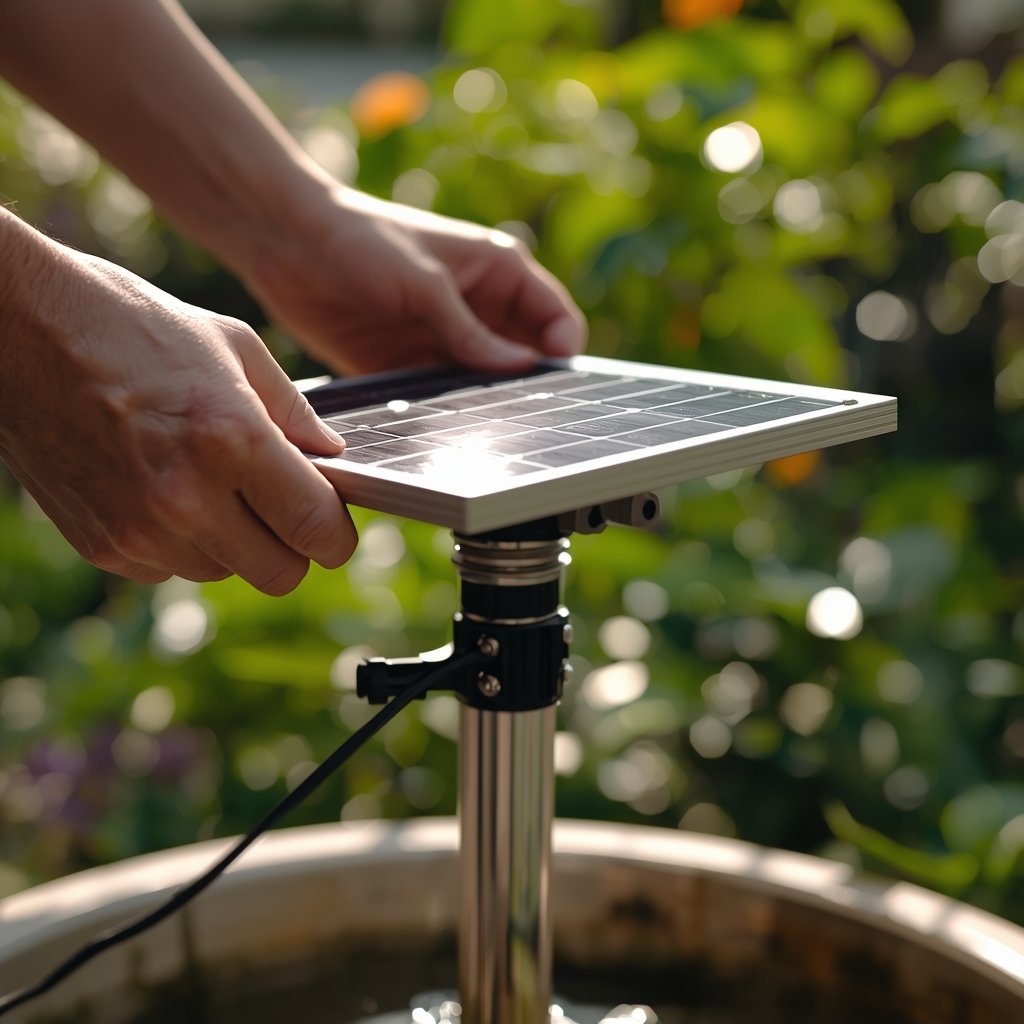
If you want consistent operation at dusk or cloudy days, choose a solar fountain pump with a battery backup option. Some models offer “hybrid” charging, letting you operate the pump manually in the evening using stored energy from sunny hours. Check reviews before you buy—a few brands overpromise on backup times.
For landscape integration, pair your solar powered fountain with rain garden features, raised garden bed kits around patio edges, or build into the center of a clover lawn for bee attraction. These complementary features support water-wise gardens and wildlife.
Advanced Analysis & Common Pitfalls
Solar fountain technology is much improved, but no system is flawless. Here are the most common issues users report—and realistic tips to avoid them:
| Issue | What To Watch For | How To Prevent or Fix |
|---|---|---|
| Inconsistent flow or stops working | Cloudy days, shadowed panel, low sunlight, or poor-quality solar cells | Site fountain in open sun; clean panel; consider a model with battery backup |
| Pump clogs | Debris, leaves, algae, heavy minerals in water | Clean pre-filter weekly; use netting over birdbath; consider distilled water if clogging is constant |
| Water loss/evaporation | Shallow basins lose water fast, especially in wind or heat | Check levels every few days in summer; install in sheltered spots |
| Winter shutdown or freeze damage | Pumps and panels can crack in a hard freeze if left outside with water inside | Empty and store fountain indoors during freezing conditions (unless rated “winter safe”) |
| Short pump lifespan | Low-quality pumps, running dry, or always-on operation without enough water | Refill as needed; read reviews; invest in a higher-end model with replaceable pumps |
| dB noise level | Most solar powered fountain models are low-noise, but some “buzz” from low-quality pumps | Test during return window; seek out quiet-verified or brushless motor models |
| Battery failure (on backup models) | Batteries lose capacity after ~2-3 years if cycled daily | Buy models with user-replaceable batteries and check compatibility/APM ratings |
| Upfront cost | Solar fountain systems cost more upfront than a basic wired pump or gravity water feature | Weigh installation savings (no electrician) and zero ongoing energy costs—often repays within 1-3 years |
For a realistic snapshot of market growth or regional trends, hard numbers are scarce: the overall outdoor fountain market grows at 7% CAGR, and solar models now comprise the majority of new consumer installations. North America leads in solar birdbath adoption, with Europe’s uptake accelerating thanks to rising interest in off-grid and wildlife-friendly features.

Conclusion
Choosing a solar powered fountain is an easy win—add beauty, wildlife appeal, and sustainable innovation to your landscape, all while avoiding the headaches of wiring or ongoing energy bills. When you pick a quality model and follow installation and care tips, solar powered fountains provide a reliable, eco-friendly upgrade to any yard or patio. Get started today and see how your garden transforms with your new solar powered fountain. Ready to start? Shop for your ideal model, or browse companion guides on edible landscaping and wildlife habitat gardening for even more backyard inspiration.
Frequently Asked Questions
Will a solar powered fountain work in the shade or on cloudy days?
Performance will drop sharply in the shade or during overcast weather. Most solar powered fountains need 4-6 hours of direct sunlight per day. Choose a model with a battery backup if you want consistent operation in varied conditions.
How do I winterize my solar powered fountain?
Before freezing weather hits, drain your fountain, remove the pump and solar panel, and store everything indoors—unless your model is explicitly rated for freeze protection. Failing to do this can cause permanent damage and void warranties.
Are solar powered fountains safe for birds, bees, and pets?
Yes—moving water encourages birds to bathe and attract beneficial pollinators, while most pumps run on safe low voltage. Do not add chemical algaecides unless labeled wildlife safe. Clean regularly to prevent mosquito breeding or contamination.
How long do solar powered fountain pumps last?
With good maintenance, a high-quality solar fountain pump lasts 1-3 years. Replaceable-pump models offer even longer life if you swap out worn components. Remember to keep the pump clean and avoid running dry to extend its lifespan.
What if my solar powered fountain stops working—are repairs possible?
Often, yes. Most issues trace to clogged pump intakes or dirty solar panels. Clean both surfaces, refill with fresh water, and test in direct sun. For more serious failures, many manufacturers sell replacement parts or individual pumps.