

Terrarium garden design has become one of the quickest, most space-efficient ways to bring green life indoors. Whether you’re after desktop greenery for a low-maintenance hobby, or seeking an alternative to labor-intensive lawns, the terrarium trend solves for both space and care challenges.
Key Takeaways
- Terrarium gardens provide living decor and ecosystems with minimal space and low regular maintenance.
- Mold and overwatering are the most common pitfalls—choose substrates and plant combinations that reduce humidity issues.
- Bioactive terrariums, when set up properly, can use beneficial insects and fungi to maintain plant health, decreasing chemical use.
- What Is a Terrarium Garden and Why Make One?
- How to Build a Terrarium Garden: Step-by-Step
- Advanced Analysis & Common Pitfalls
- Conclusion
- Frequently Asked Questions
What Is a Terrarium Garden and Why Make One?
A terrarium garden is a miniature, self-contained plant display inside a clear glass container, usually glass. It functions as both a living sculpture and a micro-ecosystem for humidity-loving plants such as ferns, mosses, and tiny vines. Closed terrariums recreate miniature rainforests, trapping moisture and reducing the need for frequent watering.
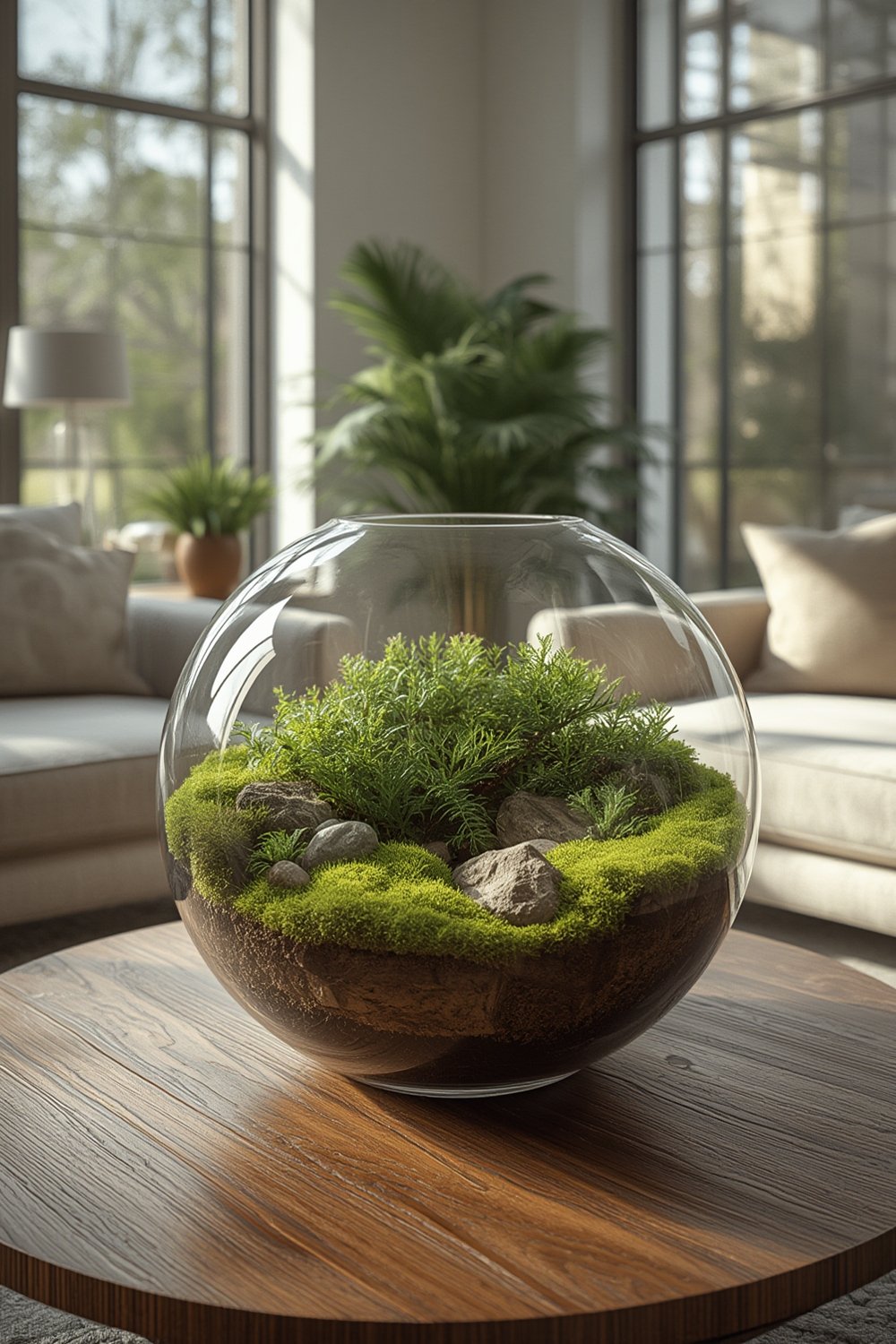
Why do terrarium gardens appeal to so many? They require little horizontal space, making them ideal for apartments, offices, or shaded corners where standard houseplants fail. Native plant lawns and clover lawns offer landscape-scale relaxation of maintenance needs, but a terrarium garden brings this benefit indoors in a fraction of the footprint—a jar or bowl nestled on a desk or shelf can become a lush focal point without irrigation systems or constant attention.
Closed glass gardens also invite experimentation with bioactive systems. By introducing organisms like springtails, you can encourage natural decomposition and pest control, reducing the dependency on chemical treatments [source]. For city-dwellers constrained by HOA rules or limited windowsill real estate, the terrarium garden is a customizable patch of nature at any scale.
How to Build a Terrarium Garden: Step-by-Step
Setting up your own terrarium garden isn’t complicated, but avoiding common errors saves time and frustration in the long run. Follow these steps for a low-maintenance, attractive setup ideal for a desktop ecosystem.
- Select the Right Container:
- Choose clear glass for best visibility. Large jars, fish tanks, or even repurposed candle vessels work.
- Closed containers (with lids) maintain humidity, but need less watering. Open containers suit succulents and reduce mold risk.
- Layer the Base for Drainage:
- Add a 1–2 inch layer of washed stones or gravel.
- Top with a thin layer of activated charcoal—this absorbs odors and filters water in the base.
- Next, add your substrate (coco coir is preferred for mold resistance) to a depth of 2–3 inches [source].
- Choose and Plant Suitable Flora:
- Opt for humidity-loving, slow-growing species: Fittonia, ferns, moss, small peperomias.
- Arrange taller plants toward the center or back for visual depth.
- Moisten substrate before adding plants but never soak it. Soggy soil is the top source of terrarium failure.
- Add Bioactive Organisms (Optional):
- Springtails and isopods break down waste and eat mold, keeping your micro-ecosystem in balance [source].
- Finish with Decorative Elements:
- Stones, driftwood, or miniature decor enhance visual interest—but avoid adding organic matter that can rot (like mushrooms or unpreserved bark).
- Initial Watering and Sealing:
- Water lightly so the substrate is damp, not wet. Wipe smudges from the glass before sealing.
- Use a spray bottle for fine misting inside.
- Location and Lighting:
- Place your terrarium garden in bright, indirect light. Direct sunlight can overheat and scorch plants in glass containers.
- LED grow lights can replace natural light for shelf placement.
- Monitoring in the First Weeks:
- Check for fog, excess condensation, yellowing, or any visible mold.
- If condensation pools, leave the lid slightly ajar for a few hours.
- Remove dropped plant leaves quickly to prevent rot.
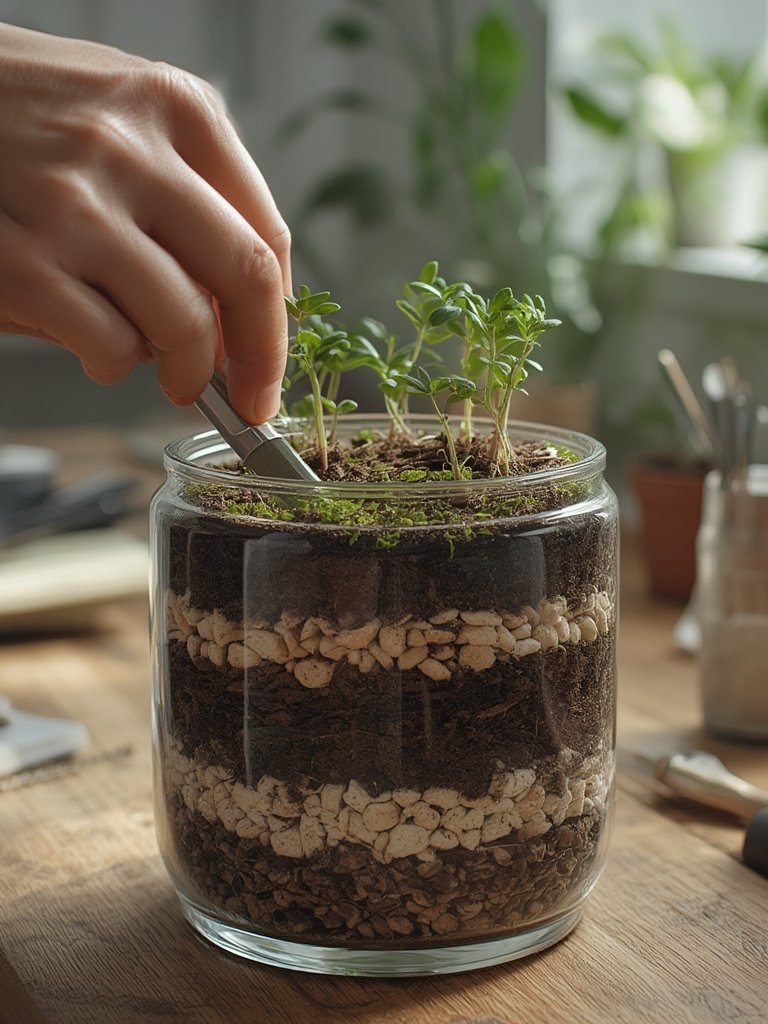
Maintenance is minimal: visually check every week and wipe the inside glass monthly if needed. Closed systems usually need water only every 3–4 weeks (or not at all, if condensation persists). If mold appears, treat with a diluted hydrogen peroxide spray (1:10 ratio) and gently wipe affected areas [source].
For an even lower-maintenance indoor garden approach with similar eco-benefits, also consider options like drought tolerant landscaping and meadowscaping for larger spaces.
Advanced Analysis & Common Pitfalls
While the terrarium garden offers beauty and simplicity, its closed nature carries a set of realistic challenges, especially for beginners. Here are the most reported pitfalls—and how to avoid them, informed by issues identified in recent user feedback and research [source]:
- Mold Growth: The most common failure point. Mold, especially white filamentous types (e.g., Hypomyces Rosellus), thrives with overwatering and decaying leaves. Thoroughly clean the glass and tools, avoid overcrowding, and only use cured hard decor (never sticks or bark from outdoors).
- Root Rot from Overwatering: Closed terrariums need far less watering than typical houseplants. Use well-draining coco coir or peat-free mixes to lower excess moisture risk.
- Pest Infestation: Fungus gnats and mites breed in moist, stagnant soil. Quarantine all new plant material and use springtails or surface-drying methods to help control outbreaks. [source]
- Foggy or Dirty Glass: Low airflow and plant respiration can fog up glass, blocking light. Wipe inside surfaces monthly with a microfiber towel—never use chemical window cleaners in a sealed garden.
- Poor Lighting: Low-lit rooms lead to weak, leggy plants. If sunlight is insufficient, use a small LED grow light to maintain healthy, compact growth.
- Biodegradable Decor Rotting: Items like wood chips, bark, or leaves decompose quickly in closed, humid environments and feed mold.
| Problem | Cause | Prevention/Treatment |
|---|---|---|
| Mold/Fungi | Overwatering, decaying organics, low airflow | Minimal watering, remove fallen leaves, use springtails |
| Root Rot | Soaked substrate, no drainage | Shallow watering, use coir, gravel, and charcoal base |
| Fungus Gnats | Moldy, moist soil | Avoid dense, waterlogged media, quarantine plants |
| Poor Plant Health | Low light, foggy glass | Relocate, clean glass, supplement with LEDs |
| Dirty/Fogged Glass | Condensation, algae buildup | Wipe monthly, avoid direct sun, open lid briefly |
| Rotting Decor | Organic decorations, wood | Use only cured hardscape, avoid fresh wood/bark |
It’s worth noting that glass containers do fog and accumulate water marks over time, so regular—even if brief—maintenance is required for best aesthetics. When comparing terrariums with options like backyard rewilding or rain gardens, terrarium gardens stand out for their ultra-low input but need the right substrate and plant matches for true “set and forget” results.
Conclusion
A terrarium garden gives you vibrant, living greenery and a fascinating miniature ecosystem with minimal space and effort. The most successful setups use mold-resistant substrates, humidity-tolerant plants, occasional maintenance, and optional bioactive helpers like springtails. Like any living project, occasional troubleshooting is essential, especially when dealing with persistent moisture or pests. For anyone searching for a realistic, beautiful way to reconnect with nature indoors, a terrarium garden delivers unmatched simplicity and satisfaction. Try building your own, and transform even the smallest corner into a thriving world. Ready to create your own terrarium garden? Start today—your indoor oasis awaits.
Frequently Asked Questions
What are the best plants for a closed terrarium garden?
Humidity-loving, slow-growing species like nerve plant (Fittonia), baby tears, moss, and small ferns work best. Avoid succulents in closed containers as they can rot from high humidity.
How often do I need to water a sealed terrarium garden?
Usually only every 3–4 weeks, and sometimes even less. If you see regular condensation, your terrarium garden likely doesn’t need extra water at all.
How do I stop mold growth inside my terrarium garden?
Prevent overwatering, remove fallen leaves immediately, wipe down glass monthly, and add springtails to break down decaying material and consume mold.
What substrate is best for minimizing mold in a terrarium garden?
Coco coir is preferred as it holds moisture evenly but drains better than potting soil; it is less likely to foster mold than peat or organic-rich soils [source].
Can I place a terrarium garden in direct sunlight?
Direct sunlight can overheat a container, causing plant stress and “cooking” your ecosystem. Use bright, indirect light or a grow LED for best results.